
Introduction
The Shift Toward Renewable Biofuels
The increasing global demand for energy, combined with the depletion of fossil fuel reserves and rising concerns about climate change, has accelerated the search for sustainable and renewable energy alternatives. Fossil fuels, while historically dominant, are associated with significant greenhouse gas emissions and environmental degradation. As a result, biomass derived biofuels have emerged as one of the most promising solutions for achieving energy security and reducing carbon footprints.
Unlike other renewable energy sources such as solar, wind, or hydropower, biomass has a unique advantage: it can be converted into liquid fuels. These liquid biofuels, particularly bioethanol, are compatible with existing transportation infrastructure, making them a viable large scale replacement for petroleum-based fuels.
Biofuel production relies on the conversion of plant-derived carbohydrates produced through photosynthesis—into usable energy. These carbohydrates include soluble sugars, starch, and structural polysaccharides. While current bioethanol production primarily utilizes sugars and starch due to their ease of processing, there is growing interest in exploiting structural polysaccharides found in plant cell walls, collectively known as lignocellulose.
Lignocellulosic Biomass
A Major Resource for Biofuel Production
Lignocellulosic biomass represents the most abundant renewable carbon source on Earth. It is primarily composed of three major components:
- Cellulose: A glucose-based polymer forming the structural backbone of plant cell walls
- Hemicellulose: A heterogeneous polysaccharide that surrounds cellulose fibers
- Lignin: A complex aromatic polymer that provides rigidity and resistance to degradation
While lignocellulose offers immense potential for biofuel production, it is inherently resistant to breakdown due to its complex and rigid structure. This resistance, known as biomass recalcitrance, presents a major challenge in converting plant biomass into fermentable sugars.
To overcome this, biomass undergoes pretreatment processes involving heat, pressure, and chemical treatments. These processes disrupt the lignin barrier and improve enzyme accessibility to cellulose and hemicellulose. Following pretreatment, enzymatic hydrolysis converts these polymers into simple sugars, which are then fermented into bioethanol.
Despite its potential, large-scale commercialization of cellulosic ethanol remains limited due to high processing costs, technological barriers, and logistical challenges associated with biomass transport and storage.
Understanding C4 Photosynthesis
One of the key determinants of biomass productivity is the efficiency of photosynthesis. Most plants utilize C3 photosynthesis, where carbon dioxide is fixed directly by the enzyme Rubisco. However, Rubisco has a dual function and can also bind oxygen, leading to photorespiration a process that reduces photosynthetic efficiency.
In contrast, C4 plants have evolved a specialized mechanism that concentrates carbon dioxide around Rubisco, significantly reducing photorespiration. This mechanism involves the enzyme phosphoenolpyruvate (PEP) carboxylase, which efficiently captures CO₂ even under high temperatures and low atmospheric concentrations.
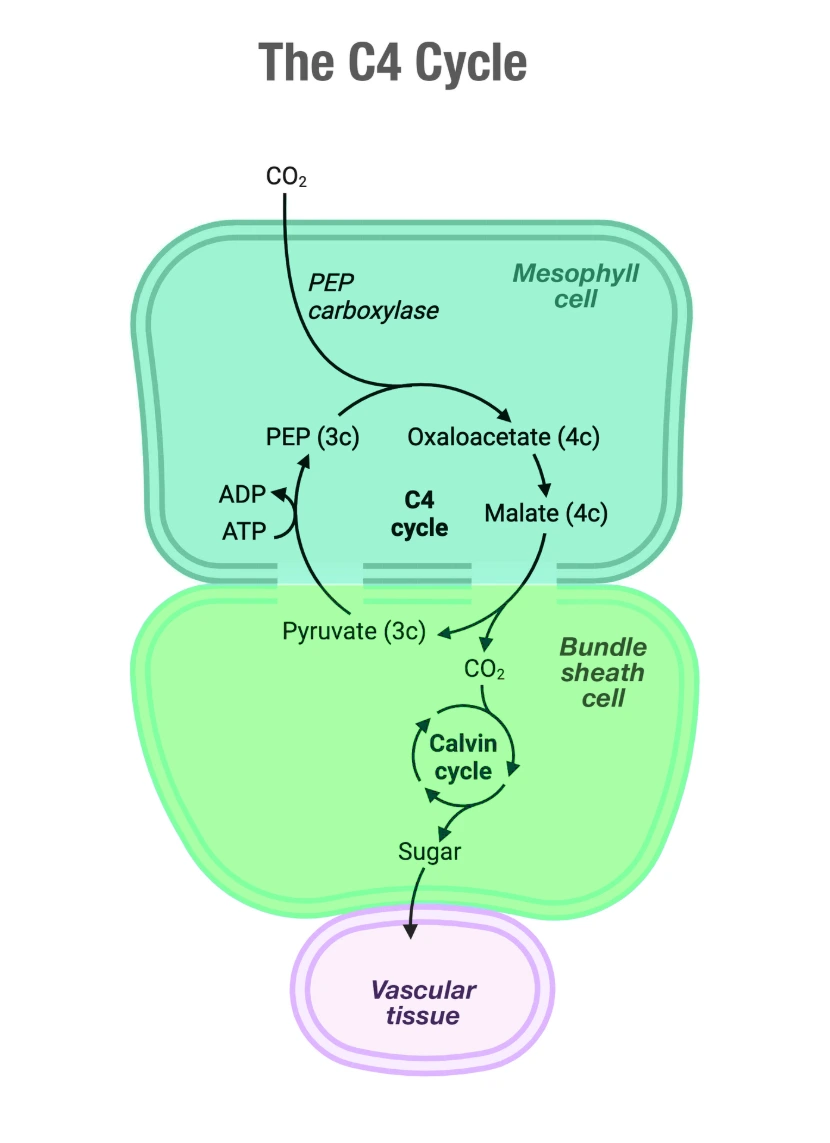
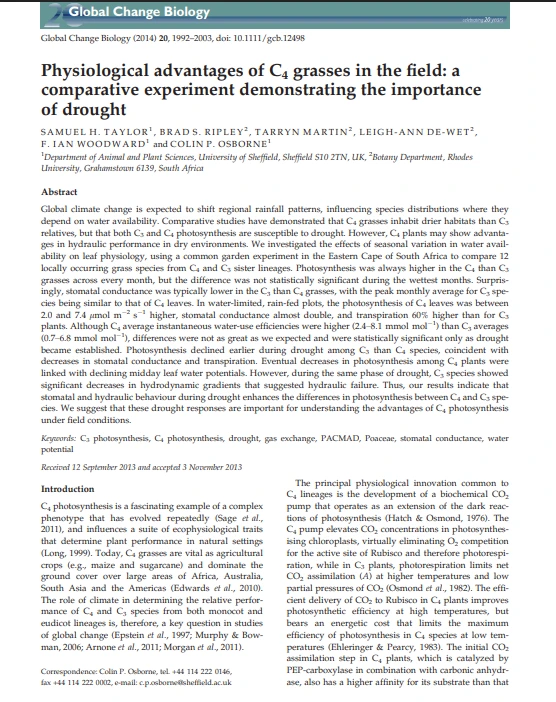
C4 grasses offer several advantages that make them ideal candidates for biofuel production:
- Higher photosynthetic efficiency, leading to increased biomass yield
- Improved water-use efficiency (WUE), allowing growth in arid conditions
- Enhanced nitrogen-use efficiency (NUE), reducing fertilizer requirements
- Greater tolerance to heat and drought, making them suitable for marginal lands
Prominent C4 Grasses for Biofuel Production
Several C4 grass species have been identified as promising lignocellulosic feedstocks:
01
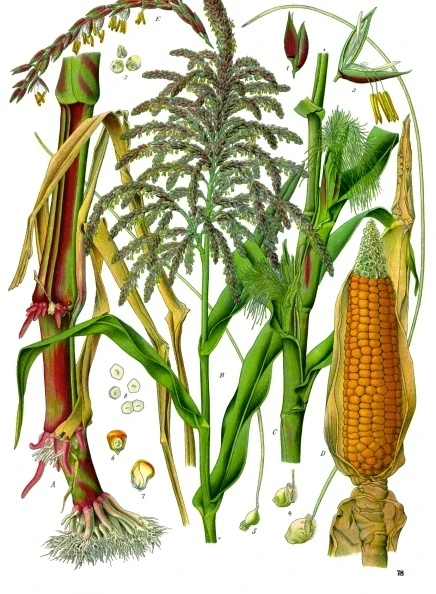
Maize is one of the most widely cultivated crops globally. While primarily grown for grain, its residues (stover) represent a significant source of lignocellulosic biomass. However, excessive removal of residues can negatively impact soil health.
02
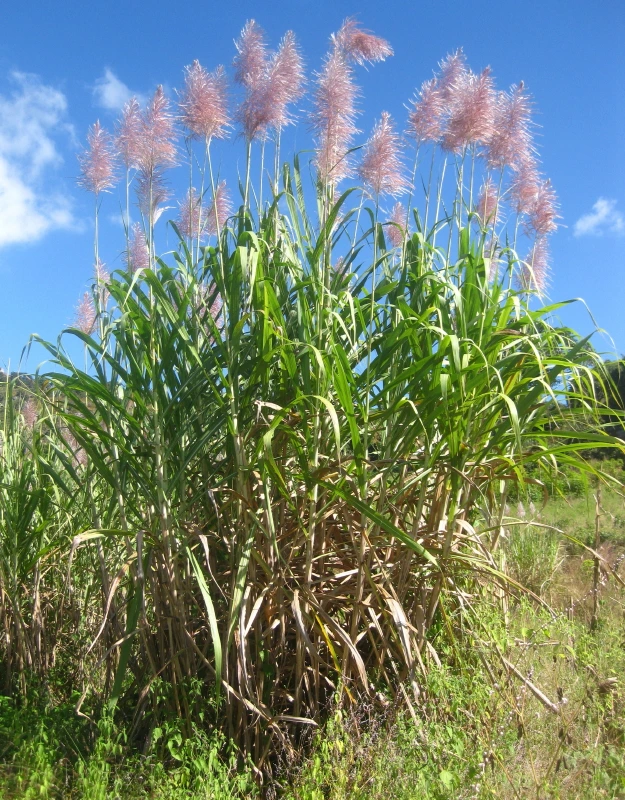
Sugarcane is a highly productive perennial crop known for its high sugar content. In addition to sugar production, it generates large quantities of bagasse and field residues, which can be used for biofuel production.
03
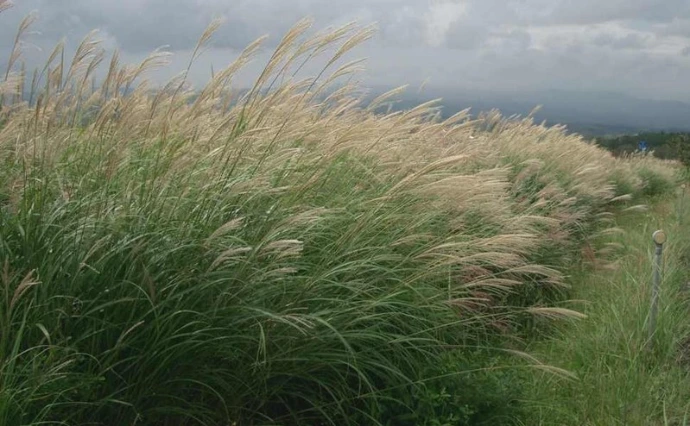
Miscanthus is a perennial grass with exceptionally high biomass yields. The hybrid Miscanthus × giganteus is widely recognized for its productivity and low input requirements, making it a leading candidate for dedicated energy cropping systems.
04
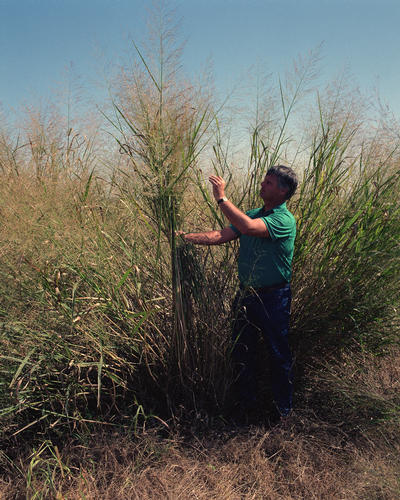
Switchgrass is a native North American perennial grass with broad environmental adaptability. It requires minimal inputs and is well-suited for cultivation on marginal lands.
Biomass Yield and Resource Efficiency
Biomass as a Co-Product
Crops such as maize, sugarcane, and sorghum produce lignocellulosic biomass as a by-product of food or sugar production. Globally, these crops generate vast quantities of agricultural residues, contributing significantly to the biomass supply.
However, sustainable harvesting of these residues is critical. Removing too much biomass can lead to soil erosion, nutrient depletion, and reduced long-term productivity.
Biomass as a Primary Product
Dedicated energy crops like miscanthus and switchgrass are cultivated specifically for biomass production. These perennial grasses offer several advantages:
- High annual yields
- Low fertilizer and water requirements
- Reduced soil disturbance
- Enhanced carbon sequestration
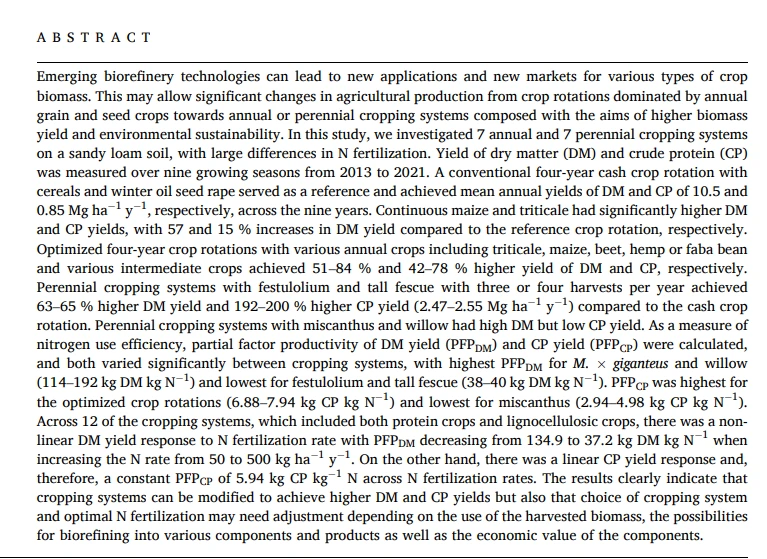
Miscanthus, in particular, has demonstrated exceptionally high yields under optimal conditions, exceeding 50 tons of dry matter per hectare in some studies.
Biomass Quality and Conversion Efficiency
The efficiency of converting biomass into biofuel depends heavily on its composition.
Importance of Holocellulose Content
Feedstocks with high levels of cellulose and hemicellulose (collectively known as holocellulose) are preferred, as they yield more fermentable sugars.
Biomass Recalcitrance
Reducing biomass recalcitrance is a major focus of research. Factors influencing recalcitrance include:
- Lignin content and composition
- Cellulose crystallinity
- Cell wall porosity
- Interactions between cell wall components
Lower lignin content generally improves enzymatic digestibility, but excessive reduction can compromise plant structural integrity.
Genetic Improvement and Breeding Strategies
Breeding Objectives
Goals in breeding C4 grasses for biofuel production include:
- Increasing biomass yield
- Enhancing stress tolerance
- Improving resource-use efficiency
- Reducing biomass recalcitrance
Challenges in Breeding
Breeding programs must consider factors such as:
- Ploidy levels and genome complexity
- Reproductive systems (self-pollination vs. outcrossing)
- Genetic diversity and available germplasm
Perennial grasses often have complex polyploid genomes, making genetic analysis and improvement more challenging.
Role of Genomics and Biotechnology
Advances in genomics, transcriptomics, and molecular breeding are accelerating the development of improved bioenergy crops. Crops like maize and sorghum serve as model systems due to their well-characterized genomes.