Plants Are The Solution
Plants are the most powerful allies to the Human for facing climate changing .
Plants are considered fundamental to regulating Earth’s climate. Through photosynthesis, they sequester carbon dioxide, reduce greenhouse gas concentrations. Forests, grasslands, and wetlands act as major carbon sinks, storing carbon in biomass and soil. Vegetation influences the hydrological cycle by controlling evapotranspiration, rainfall distribution, and soil moisture retention. Plant roots stabilise soil, preventing erosion and land degradation, which can release stored carbon. Urban and reforested areas mitigate surface warming through shading and evapotranspiration cooling. Biodiverse plant systems enhance ecosystem resilience against climate perturbations. Therefore, maintaining and restoring plant ecosystems is essential for long-term climate stabilisation.
As result of their ecological importance, understanding the genetic composition of plants is equally crucial for enhancing their role in climate resilience.
Studying plant genomes allows scientists to identify genes responsible for stress tolerance, carbon sequestration efficiency, and growth under extreme environmental conditions. Genomic analysis facilitates the development of crops and forest species that can withstand drought, high temperatures, and pests, thereby maintaining ecosystem stability. Advanced techniques like PCR and sequencing helps precise modifications to enhance photosynthetic capacity and biomass accumulation. Moreover, genome mapping helps conserve genetic diversity, ensuring the survival of species that contribute to carbon storage and soil stabilization. Integrating genomic knowledge with ecological management strengthens our ability to combat climate change and sustain planetary health.


Eco-Friendly Community
Biotechnology empowers communities to adopt sustainable practices that protect the environment and promote green development.
Education & Research
scientific progress, technological development, and the improvement of human and environmental well-being .
Environmental Conservation Efforts
Molecular biology supports conservation efforts by assessing genetic diversity, monitoring populations, and guiding breeding and restoration programs
Importance of Grasses and the Need for a Model System
Grasses (family Poaceae) represent one of the most critical biological resources for human survival and global economic stability. Their importance predates the development of agriculture, as archaeological evidence demonstrates that early human populations were already harvesting and processing wild grass seeds approximately 30,000 years ago. Interestingly, among these early-utilized species were members of the genus Brachypodium, highlighting their long-standing ecological and nutritional relevance. The transition to agriculture around 10,000 years ago, particularly the domestication of cereal crops such as wheat, marked a major turning point in human civilization. The ability to cultivate grasses with predictable yields, efficient storage capacity, and high caloric value enabled the development of permanent settlements, urbanization, and ultimately modern societies.
In the present day, grasses continue to dominate global agriculture. Major crops such as Zea mays, Oryza sativa, and Triticum aestivum collectively supply the majority of human caloric intake, either directly or indirectly through livestock feed systems. According to global agricultural statistics, grass crops consistently rank among the highest in total production volume worldwide, emphasizing their central role in food security and agro-industrial systems.

Global Food Demand, Climate Change, and Agricultural Challenges
The rapid growth of the global population, combined with increasing standards of living, is placing unprecedented pressure on agricultural systems. It is projected that global grain production must increase by approximately 70–100% by the year 2050 to meet future demand. This challenge is further intensified by climate change, which introduces variability in temperature, precipitation, and extreme weather events, all of which negatively impact crop productivity.
Despite significant technological advances, current yield improvement rates for major cereal crops remain insufficient. For example, historical data indicate relatively modest annual increases in crop yield, highlighting the limitations of conventional breeding strategies. Addressing this gap requires the integration of innovative approaches, including molecular genetics, genomics, and systems biology. Model plant systems play a crucial role in this context, as they provide fundamental biological insights that can be translated into crop improvement strategies
Expanding Energy Demand and the Role of Grass Biomass
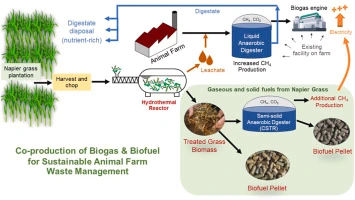
In addition to food production, the increasing global demand for energy is driving the exploration of renewable and sustainable energy sources. Biofuels derived from plant biomass are emerging as a viable alternative to fossil fuels, particularly for transportation sectors where electrification remains challenging. Perennial grasses such as switchgrass and Miscanthus have gained attention as promising bioenergy crops due to their high biomass productivity, adaptability to marginal lands, and low input requirements.
However, these species present significant challenges for genetic improvement, including complex polyploid genomes, long life cycles, and limited domestication. As a result, they are not yet fully optimized for large-scale biofuel production. The use of model plant systems is therefore essential to accelerate the domestication and genetic enhancement of these crops by providing transferable knowledge on growth, metabolism, and stress responses.
Limitations of Traditional Model Systems in Grass Research
Historically, major cereal crops such as maize and rice have served as model organisms for grass biology. While both species offer valuable genetic resources and extensive research communities, they present practical limitations. Maize, for example, has a large physical size and relatively long generation time, making it difficult to maintain under controlled laboratory conditions. Additionally, its complex genome and transformation challenges can limit its use in high-throughput molecular studies.
Rice, although smaller and more manageable than maize, still requires specialized growth conditions and is primarily adapted to tropical environments. Furthermore, regulatory and intellectual property constraints can restrict access to genetic resources. These limitations highlight the need for a more accessible, flexible, and experimentally tractable model system for grass research.
Comparison with Arabidopsis thaliana as a Model Organism
The model plant Arabidopsis thaliana has revolutionized plant biology due to its small genome, rapid life cycle, ease of cultivation, and high transformation efficiency. It has enabled the development of extensive genomic resources and a highly collaborative global research community. However, as a eudicot species, Arabidopsis differs significantly from grasses (monocots) in key biological aspects.
Critical processes such as cell wall composition, reproductive development, grain formation, and symbiotic interactions differ between monocots and dicots. Consequently, findings derived from Arabidopsis are not always directly transferable to grass species. This evolutionary divergence underscores the necessity of a dedicated model organism within the grass family.
Emergence of Brachypodium distachyon as a Model Grass
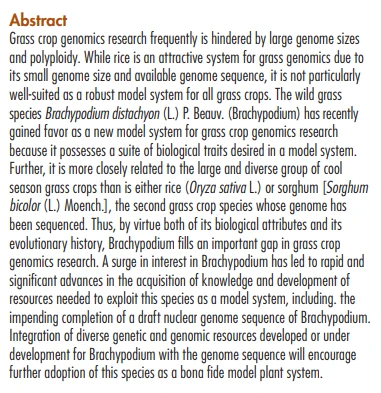
The genus Brachypodium, particularly Brachypodium distachyon, has emerged as a highly suitable model system for grass research. Early studies in the 1990s identified its potential based on favorable biological characteristics, including a small genome size, short life cycle, compact growth habit, and diploid genetics. These features align closely with the criteria for an ideal model organism
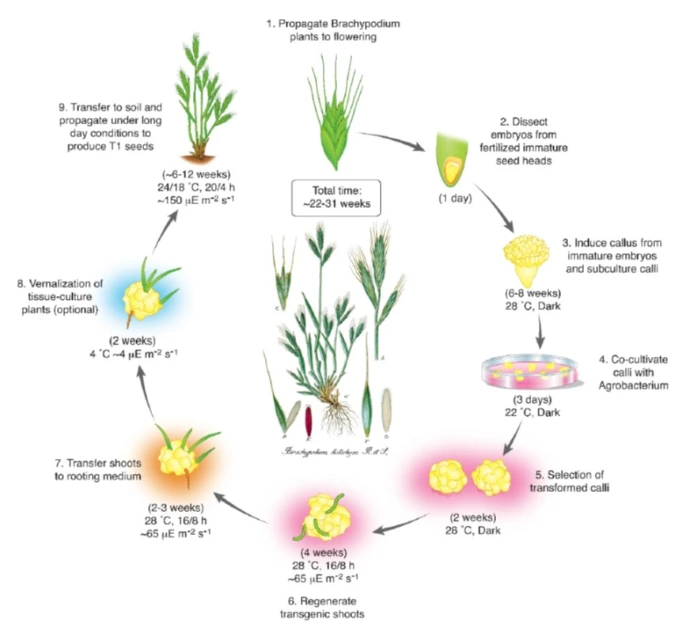
Subsequent research demonstrated the feasibility of genetic transformation and the presence of natural variation in traits such as disease resistance, further supporting its utility. The development of tissue culture and transformation protocols marked a significant milestone, enabling functional genomics studies in this species.
Development of Genomic Resources and Transformation Technologies
The establishment of genomic resources has been instrumental in the adoption of Brachypodium as a model system. The creation of bacterial artificial chromosome (BAC) libraries and the availability of inbred lines provided foundational tools for genetic analysis. The development of efficient transformation methods, particularly using Agrobacterium tumefaciens, enabled gene functional studies and mutagenesis approaches.
The sequencing of the Brachypodium genome represented a major breakthrough, providing a comprehensive reference for comparative genomics with economically important crops such as wheat and barley. This genomic information has facilitated gene discovery, evolutionary studies, and the identification of conserved pathways across grass species.
Future Perspectives and Scientific Outlook
The future of Brachypodium as a model system is highly promising. With a well-established research infrastructure, extensive genomic resources, and a growing scientific community, it is positioned to play a central role in advancing plant biology and agricultural biotechnology.
Its applications extend beyond basic research to include crop improvement, bioenergy development, and climate resilience studies. By bridging the gap between model systems and complex crop species, Brachypodium provides a powerful platform for translating fundamental discoveries into practical agricultural innovations.

Conclusion
The rise of Brachypodium distachyon as a model grass system represents a significant advancement in plant science. It addresses the limitations of traditional models and provides a versatile platform for studying the unique biology of grasses. Through its integration into genomics, breeding, and bioenergy research, Brachypodium is accelerating scientific discovery and contributing to solutions for global challenges related to food security, energy sustainability, and environmental change.